“…You can see how it (Charity) got the modern sense. If a man has “charity”, giving to the poor is the most obvious thing he does, and so people came to talk as if that were the whole of charity”.
C.S. Lewis, Mere Christianity
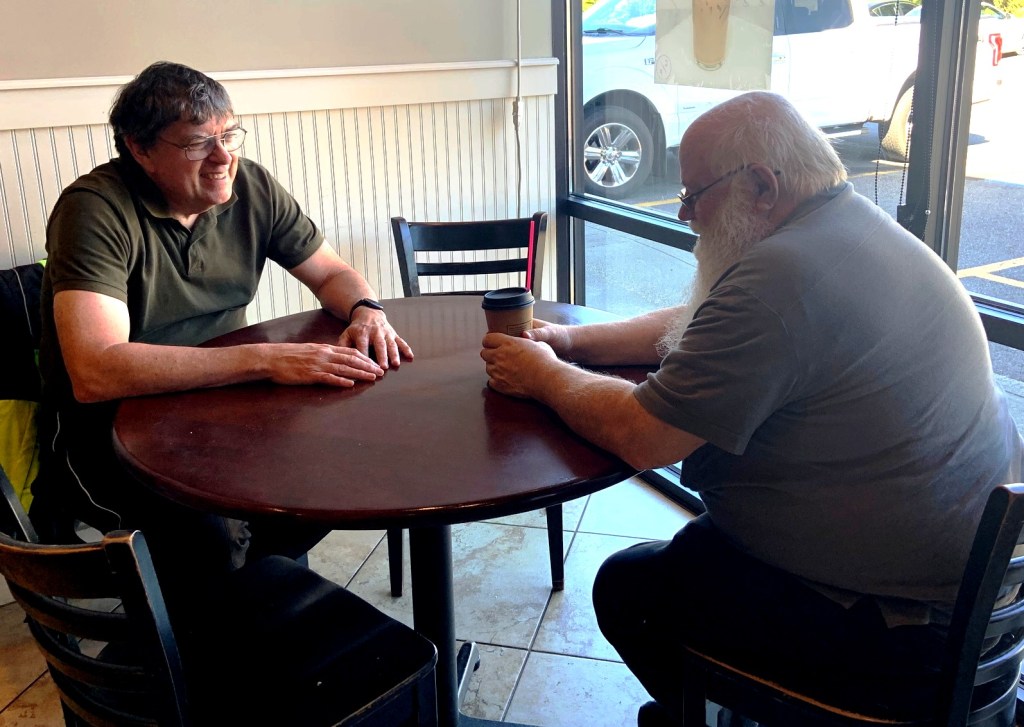
Before we came to the decision that every meal was ‘Dutch treat’ (pay for your own.) a good brother in the Lord and I had just enjoyed a meal and some fellowship at a restaurant. We then engaged in the traditional battle over who would pay the bill. The winner flashed the check victoriously at the waitress, and the defeated declared “Well, I’ll get it next time”. After leaving the restaurant, we began a discussion about this phenomenon of never wanting to feel like we were indebted to someone after they had done a favor for us. When we had parted, I began to consider how it is often hard for me to receive a favor, help or gift from someone. I talked to others and found this to be pretty common. This got me thinking about the charity of receiving.
We often think of charity as simply giving money, but it is much more than that. Biblically, charity is the expression of love, and an act of will rather than a feeling. Being able to give and receive can both be important expressions of love and are necessary for healthy relationships. If we always receive but never give, we become selfish and self-centered. If we always give but never receive, even if we are well- intentioned, we can become bitter because we don’t feel appreciated or sorrowful that no one seems to care about us. So, it looks as though we have this thing built into us by which we are most comfortable if we can sometimes be a giver and sometimes a receiver. Like everything else, though, this part of our nature was twisted at the fall. It seems like the tendency is for pride to rise up and we give in order to feel superior instead of bless, and we tend to receive only when we must, or when we feel we have a chance to “even the score” later. Of course, both nature and nurture affect how true this is for any individual.
Acts 20:35 says “… remember the words of the Lord Jesus, how he himself said, ‘It is more blessed to give than to receive.'” However, it doesn’t say that it isn’t blessed to receive. The only way we can experience blessing is to receive it! Of course Jesus himself gives us many examples of giving, from healing people to dying for us. But there are are examples of his receiving as well. He graciously received the anointing by Mary (Luke 7:41-47) and the praise of the people upon the triumphal entry into Jerusalem (Matthew 21:1-9). In the case of Mary, we see that Jesus was blessed by the act of receiving “washing” and “anointing”, Simon and the others there were blessed by an example of charity and Mary was blessed by being able to express her love for the Lord.
By not graciously receiving a gift offered, we may be hindering God’s work in someone’s life, such as removing something from a person’s life which is a stumbling block to them, but would be a blessing to us. He may be teaching someone about sacrifice, or He may be teaching the giver to listen and obey. In another way, giving may fulfill a need or desire of the giver, they may be trying to express something they cannot get across any other way.
One of the best examples of the charity of receiving seem to come from my experiences with children.
We really don’t need those little things they make for us at school or church. Still it blesses us to receive them because of the work they put into them and their desire to please us. It blesses them when we receive them graciously because they feel important and sense that their hard work is valued. We don’t come out ahead monetarily when we give our children money to buy us a birthday or Christmas present, or the materials to make one, but we are blessed because they think about us and make an effort to buy or make a gift which is pleasing to us. They are blessed because they begin to develop the habit of being giving people. I know I am really blessed when my children express their love for me with a hug or with words. They are blessed because their love finds a place of expression and is received.
Let us grow, in giving certainly, but in receiving also, that we might be a tool of greatest possible blessing in the hand of God for all the people we encounter.
 Random Thoughts
Leave a comment