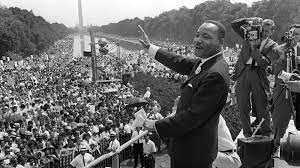
“I have a dream that one day this nation will rise up and live out the true meaning of its creed: We hold these truths to be self-evident, that all men are created equal. I have a dream that one day…the sons of former slaves and the sons of former slave owners will be able to sit down together at the table of brotherhood…I have a dream that my four little children will one day live in a nation where they will not be judged by the color of their skin but by the content of their character. I have a dream today. I have a dream that one day…little black boys and black girls will be able to join hands with little white boys and white girls as sisters and brothers. I have a dream today.” Martin Luther King Jr.,
In honor of the 60th anniversary of Martin Luther King Jr’s speech ‘I Have a Dream’ I posted about the vast influence that Dr. King had on the civil rights movement in the 1960s and how his legacy was honored with a Nobel Peace Prize, street names across the nation and a day named in his honor. There are lots of events and activities given dates in our annual calendar. Many of them I think are frivolous. Martin Luther King Jr. Day is one I have come to believe is deserved and worth noting because of the out-sized influence of MLK, and because there are voices which would shout-down the good things his legacy accomplished. Methinks most reasonable people agree that his vision of a color-blind society and equal opportunity for everyone regardless of immutable characteristics is worthy. As I look around society, it seems like for the most part he succeeded. It might be useful to remind us of some of the outcomes of his difficult and courageous work.
Among the many victories of the civil rights movement of which MLK was key are the Civil Rights Act of 1960, addressing obstructions to the right to vote; the Civil Rights Act of 1964 aimed to end segregation and discrimination based on race, color, religion, sex, or national origin; the Voting Rights Act of 1965, aimed at overcoming barriers to voting for black Americans in the Southern states; the Fair Housing Act of 1968, also known as the Civil Rights Act of 1968, prohibits discrimination in the sale, rental, and financing of housing based on race, religion, national origin, or sex; the Equal Pay Act of 1963, addresses wage disparities based on gender. It required that men and women receive equal pay for equal work; the Age Discrimination in Employment Act of 1967, enacted to address age-based employment discrimination. It prohibits employers from discriminating against employees and job applicants who are 40 years of age or older based on their age; the Higher Education Act of 1965, aimed at promoting equal access to higher education. Its intent was to ensure that federal funds were not used to support discriminatory practices in educational institutions.
Let me be clear that while some of these were part of Lyndon B. Johnson’s ‘Great Society’, I think there was much of the Great Society legislation which has been more harmful than helpful. Also, some terms and definitions have been altered since then, reducing the effectiveness of some of the legislation. My focus here is the legislation that actually works on removing discrimination against anyone while maintaining accountability for everyone.
As we face the destructive and divisive politics of tribalism and identity, let’s remember that a unifying movement spearheaded by Martin Luther King Jr. turned our nation on it’s head and moved in a very positive direction for American culture. We mustn’t lose the momentum gained since that era. Stand strong and pass on the good things about MLK and America to people who don’t know, or may have forgotten.
Thoughts?
If you’d like to know when I post these random bits, put your e-mail address in the box and touch ‘Subscribe’. It’s free, and I won’t sell your information.
 Random Thoughts
Leave a comment